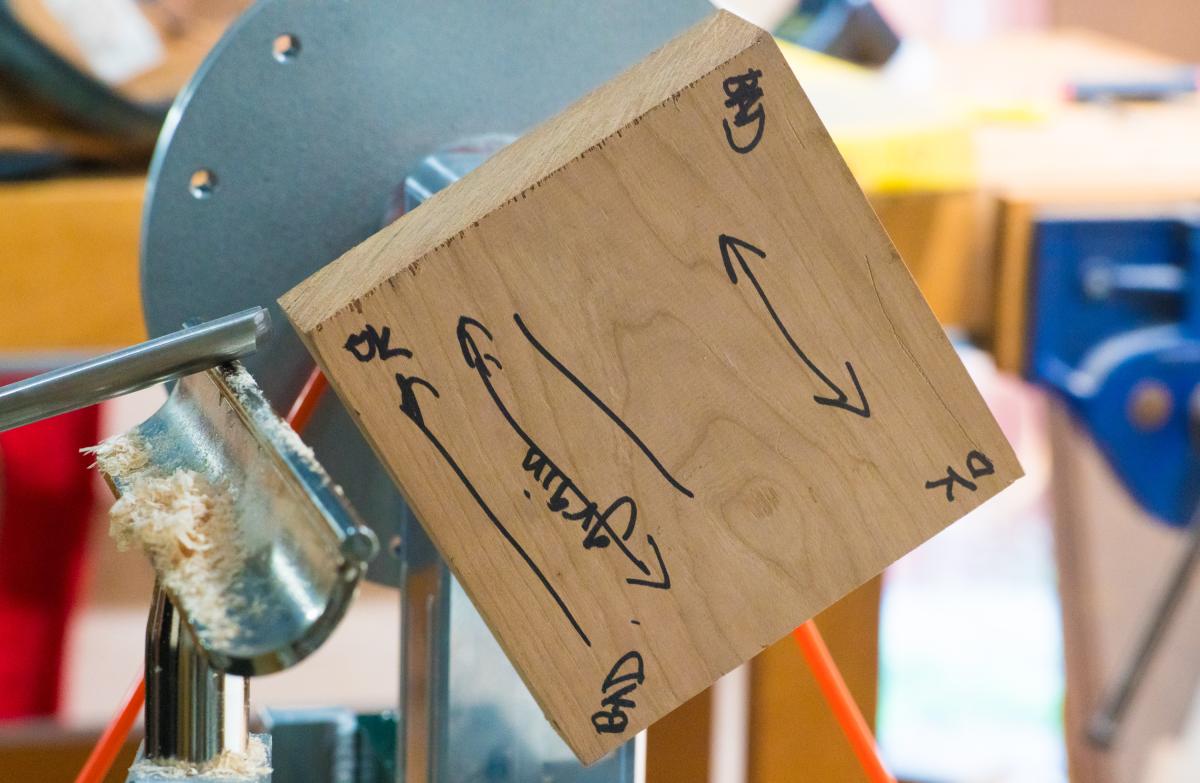
In my very recent blog post about turning between spindles I noted that you are simply peeling away wood perpendicular to the grain. Bowl turning presents a different challenge: as the work turns, the grain of the wood is presented parallel to a the tool and constantly changing direction. This makes the wood splinter out half the time (see picture above).
You can easily find instruction on YouTube to help you develop techniques to avoid this problem. But I couldn't find a single source that explained why the techniques work. For woodworkers like me, learning sticks much better when I understand the "why" and not just the "how."
In the previous post I noted that you will want to ride the bevel if you want a smooth cut. This is also true in bowl turning, but the first step is making a square wood block round. So I don't have a bevel to ride on. My initial steps in bowl turning are rounding the stock and shaping the outside of the bowl. With no bevel to ride, I can control the cut through a steadiness of the position on the rest and as even a treadling pace as I can maintain.
With the tool face up, no matter what you do, it will split out the timber when the grain goes the wrong way.
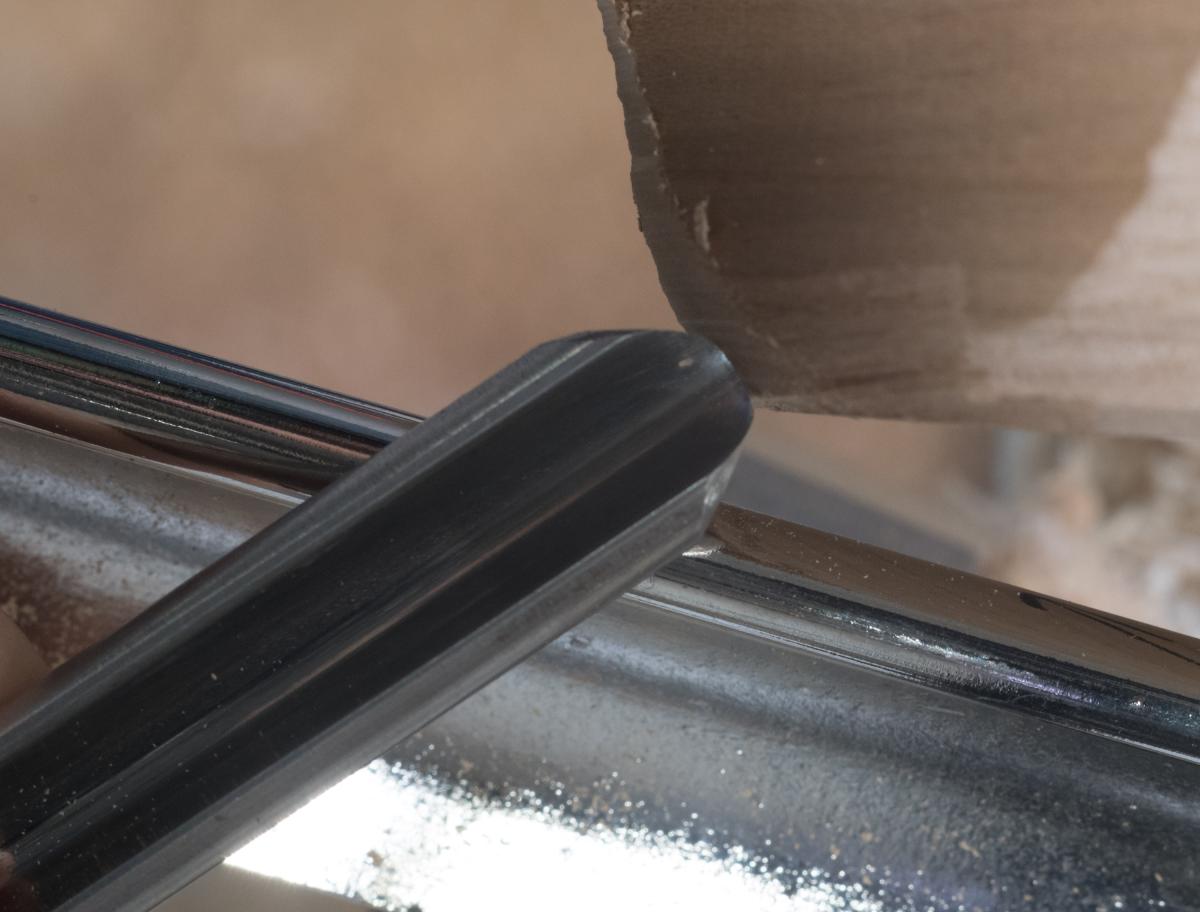
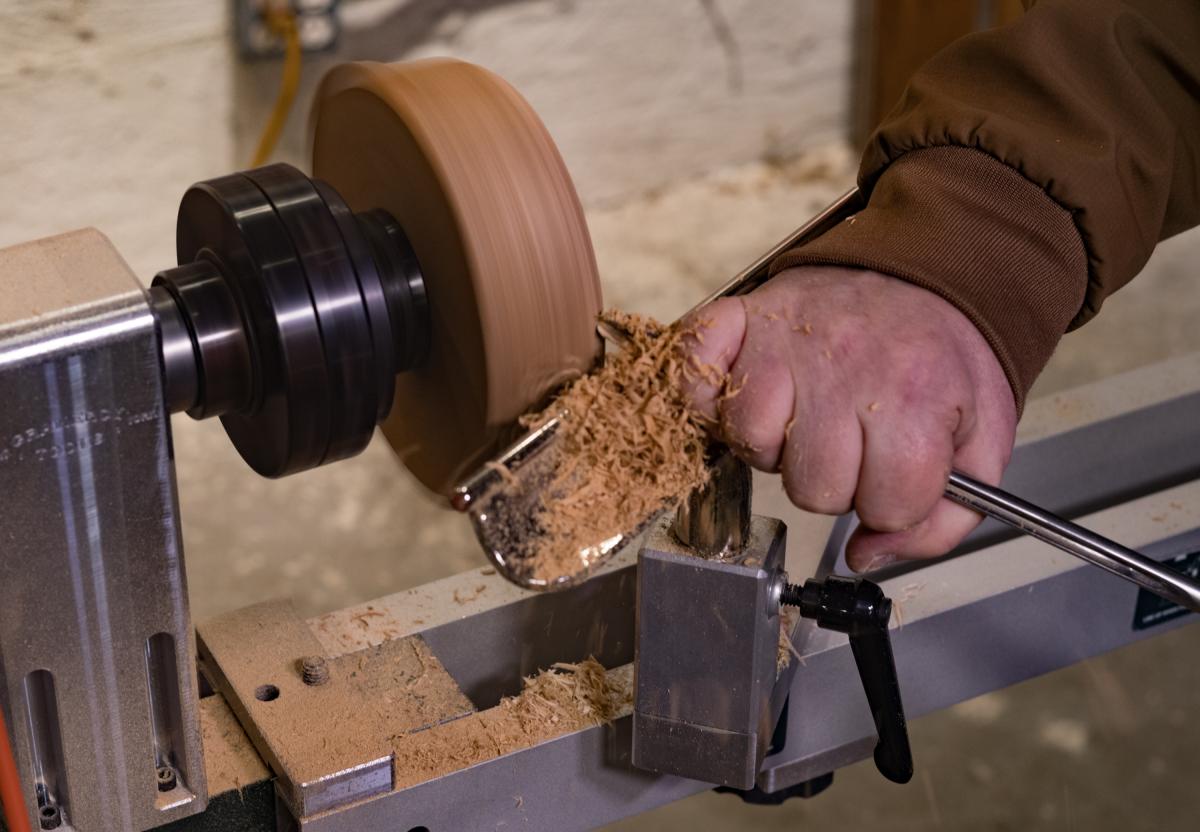
When you are turning a bowl, any gouge held perpendicular to the ways of the lathe, with the curve of the gouge facing down will inevitably splinter the wood. Even with a gentle and controlled feed, you are turning into the grain half the time. If instead you position the tool parallel to the ways of the lathe, you are in slightly better shape. You are peeling the wood some of the time, but some of the time curve of the gouge facing downwards will cut against the grain, resulting in splintering (figure above). With the tool on its side, the nose of the tool scores/cuts the fibers of the wood and you get a clean cut.
The solution lies in the geometry of a bowl gouge. A standard roughing gouge is ground with a flat nose - and when you touch the wood, the gouge starts peeling it away. A bowl gouge has a nose that sticks out a bit. With the tool held parallel to the ways of the lathe, and the gouge's curve facing downward as it engages the wood, you will start peeling the wood away and end up with the same grain changing problem.
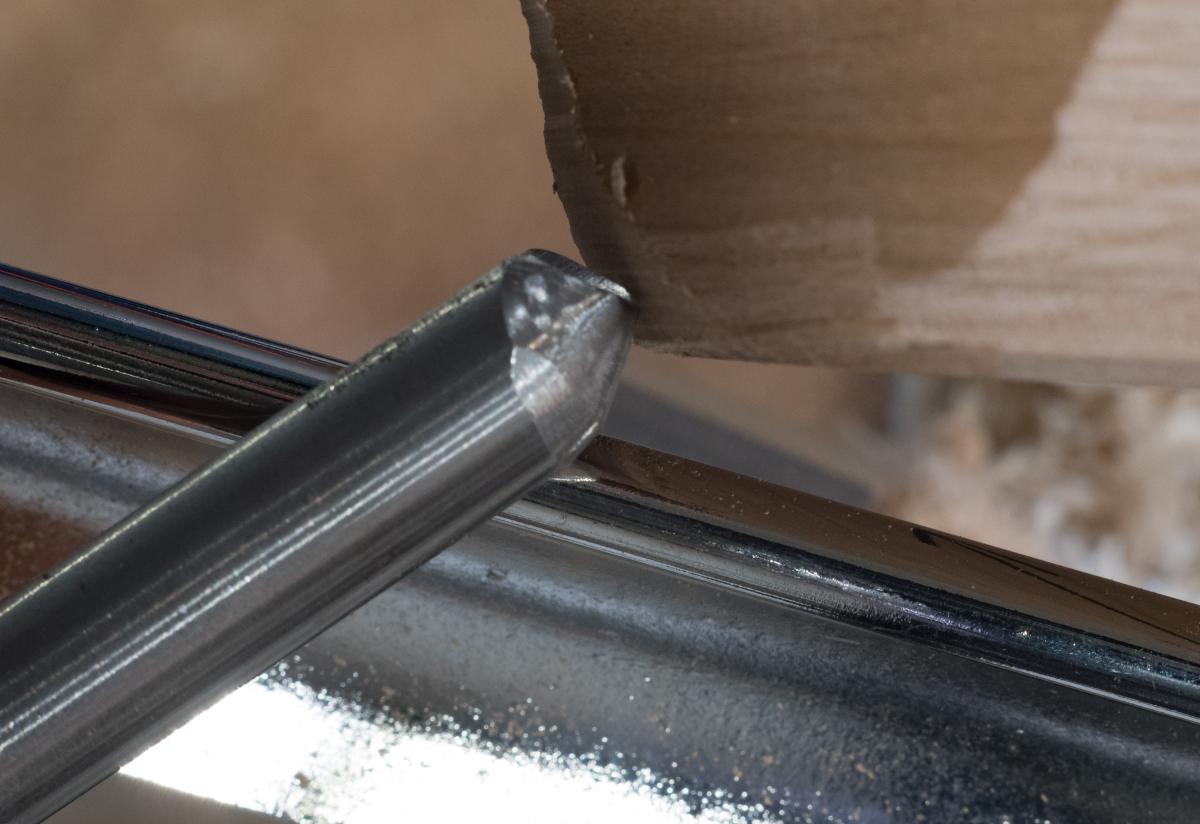
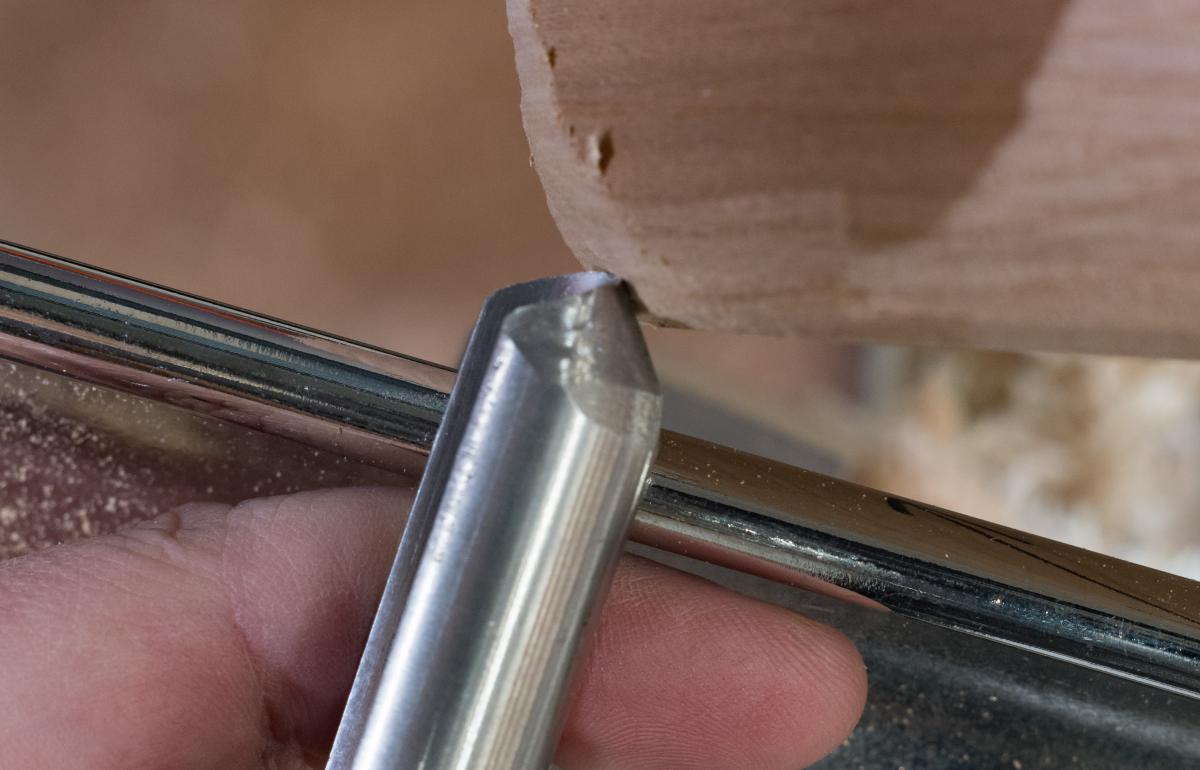
But what happens if you rotate the tool nearly 90 degrees towards you and angle it slightly tilted up? Magic happens! (See figure above.) The sharp nose of the tool isn't peeling away the wood anymore. The tool is scoring the fibers of the wood, so the bottom bit of the gouge, which is now facing up, can easily peel away the scored wood without splintering - no matter which direction the grain goes.
Turning the outside of the bowl becomes a simple matter of following the outside profile around from the center, scoring fibers and lifting them out. As I have more and more of a rounded bowl I can start riding the bevel and getting a smooth cut (below). With the tool slightly turned, the fibers are cut, the bottom part of the tool shaves off the cut material, and the bevel on the tool can ride the work, giving a stable cut.
You can use a spindle gouge, which also has a protruding nose, to do the same thing, but the nose on a spindle gouge is longer and will score more deeply before the sides of the gouge can peel away material. The spindle gouge will work, but with less control. Bowl gouges are also typically heavier and stiffer than spindle gouges. This trait is desirable because bowl turning offers many situations in which the gouge is hanging farther off the rest than usual, and you need a stiffer gouge to keep everything steady.
Turning the inside of a bowl provides a similar situation - only more challenging. The grain changes direction on the inside as it does the outside. This turning technique helps, but you have the additional challenge of limited clearance for the tool. Paying more attention to tool position pays off, but requires practice. Scraping tools are routinely used on the inside of a bowl. There are also specialized tools, designed specifically to approach the wood at the correct angle when there is no space for a regular tool. But we'll save a discussion of those tools for another time.
In the photos I am using a 1/2" bowl gouge. However, I discovered that a 1/4" bowl gouge seems to work more efficiently for me on the treadle lathe because because a treadle lathe has limited power. Now that I understand how the gouges work, I am roughing the bowl out pretty quickly. Soon I should have a circular blank ready for final shaping - and then the inside of the bowl. I have noticed that now I know how to use the bowl gouges correctly, my gouges, even when they have gotten duller with use and are cutting more slowly or barely cutting, are not grabbing or causing tearout. And with a quick sharpening, the tools are back to cutting curlies.
With the tool on its side, the bowl stock can be rounded with continuous cuts that give a nice shaving




 Joel's Blog
 Built-It Blog
 Video Roundup
 Classes & Events
 Work Magazine
